The month of December is traditionally one for giving and receiving gifts. It seems fitting then, as I try to select the perfect present, that I’ve spent most of the month addressing the question “What is Luxury?” (see “Is the term “luxury brand” overhyped?” and “More on What is Luxury?“).
We may have to leave the year with the question unanswered, or at the very least, we may have to settle for a paradox, according to a recent article in The Economist: “The Modern Luxury Industry Rests on a Paradox.”
I thought it fitting to wrap up the year with this article. It covers all aspects of the luxury question from many perspectives: age, geography, politics, world events, and social climate. Continue reading “It’s All About That Service!”→
This seems to be the week to address the question “What is luxury? (See “Is the term luxury brand overhyped?”). That’s why I’m happy to report London’s Victoria and Albert Museum will explore the luxury iquestion n an upcoming exhibit “What is Luxury?” from April through September 2015.
According to the V&A website:
What is Luxury? will interrogate ideas of luxury today. It will address how luxury is made and understood in a physical, conceptual and cultural capacity…The future of luxury will be explored, asking questions about the role that time, space, privacy, well-being, social inclusivity and access to resources and skill may play in determining our choices and aspirations.
Yesterday someone told me there’s no point in trying to exceed customer expectations, because once you do, the bar is raised and the exception becomes the norm. It creates a never ending spiral upward. All I can say, is “poppycock” (yes, people used to say “poppycock,” probably the same folks who used to say “balderdash”). Anyway, you get my point. Continue reading “Should We Try to Exceed Customer Expectations?”→
My last post talked about educational institutions that now offer Luxury MBA degrees. This led to the question—what happens once you have such as degree? Interestingly, I just ran across an article from the Boston Consulting Group titled, “Minding the Talent Gap: Fashion and Luxury’s Greatest Challenge for the Next Decade.” The article reveals that luxury companies are struggling to find the right talent. What a perfect time to evaluate whether those Luxury MBA programs provide the same skills and knowledge that luxury and fashion brands seek today. For example, needed skills at the executive level are: analytical and creative skills; retail, product, and brand expertise; and international experience. Continue reading “Finding Luxury Talent”→
After reading through the list, some of my key takeaways are:
There is over saturation in the luxury sector. Brands will need to do an even better job of differentiating their products and services. Customer service, relationship building and social outreach are critical.
Leaders must strive to inspire, empower, measure and reinforce best practices.
Also, and very importantly, look for luxury brands to empower store sales associates who have multi-channel clients to reach out and build human relationships after the client purchases in any channel.
More and more luxury and fashion brands are using omni-channel retailing to maximize their brand exposure and increase purchasing opportunities for their customers. For omni-channel to work successfully, the brand message needs to be consistent across all consumer touch points, including in-store, online, mobile apps, social networking, etc. In order to deliver a seamless customer experience, sales associates will need a new level of training in technology, product and processes. Continue reading “What the Luxury Sales Associate Needs to Know in an Omni-Channel World”→
Luxury has been defined as something that is pleasant to have or experience, but is not a necessity. The concepts of exclusivity and rarity can also factor into the definition of luxury. Value, on the other hand, is determined by the relation of price to perceived benefit. But if luxury is not a necessity, then how do we determine its value? Continue reading “The Value of Luxury”→
Your next room service order at JW Marriott Hotels & Resorts may be delivered with a pirouette. The luxury hotel brand is partnering with The Joffrey Ballet to train employees in basic ballet movements to improve their grace. Extraordinary idea! When I’ve done training with luxury sales teams, I’ve emphasized that everything they say and do should be done with both elegance and grace. I can think of no more perfect metaphor for elegance and grace than the ballet dancer.
The program, “Poise and Grace,” is a series of inspirational video training tutorials led by Ashley Wheater, artistic director of The Joffrey Ballet. In the video below, Mr. Wheater talks about how we can use “everyday choreography” to create poise in our bodies. He says, “Dancers, through their training and through their exercises, [they] embody grace.”
As a brand partner, Mr. Wheater worked together with JW Marriott to identify the four core behaviors that help dancers embody poise and grace:
Warming Up
Proper Breathing
Flow of Movement
Connecting to the Audience
The exercises take between 5 to 15 minutes to perform. They focus on posture, eye contact, and the use of specific gestures to create an air of confidence and discipline. Vice president and global brand manager of JW Marriott Hotels & Resorts, Mitzi Gaskins, says:
Poise and posture are globally recognized cultural cues that reflect the care and dedication our associates provide in every service interaction.
By training their associates to interact with customers with poise and grace will elevate the JW Marriott’s luxury service experience to another level. In ballet terms, that’s an elevé we should all try to reach.
For more details on the “Poise and Grace” program, click this link: Marriott News.
Last week I visited a well-known electronics retailer to purchase a new tablet. The battery on my own tablet was no longer holding a charge and I thought I’d try some of the new models. I visited this specific retailer knowing they had various test models on display. Of course, the devices were cabled to the display stands to prevent pilfering—this makes sense. However, as I picked up a test model an alarm went off. It wasn’t loud enough to be heard throughout the store, but it was loud enough to be annoying. I spotted a salesperson and asked for assistance. Her reply was that she wasn’t authorized to disable the alarm and I would have to wait for a tech person. After a few minutes a tech person arrived and shut off the alarm. He warned me, however, the alarm was quite sensitive and would probably go off again. He suggested I visit another area in the store dedicated to that manufacturer. I waited there approximately 10 minutes as the single salesperson assisted another customer. Frustrated, I returned to the original display and picked up a different model tablet. Guess what? More alarms! I left the store.
In my recent blog post “Ditch the Pitch,” I talked about eliminating the prescribed sales script in favor of critical thinking. Not every sales situation can be addressed with a script. Sales associates who can think quickly on their feet will be able to handle unexpected obstacles with grace and elegance, solve problems quickly, and provide a richer customer experience.
With that in mind, I just finished reading an HBR blog post by Joe Panepinto where he says:
Too many companies are still trying to create thick manuals that lay out every possible scenario and a corresponding brand-appropriate response — an “if they do this, you do that” kind of approach. Very reactive.

 The month of December is traditionally one for giving and receiving gifts. It seems fitting then, as I try to select the perfect present, that I’ve spent most of the month addressing the question “What is Luxury?” (see “Is the term “luxury brand” overhyped?” and “More on What is Luxury?“).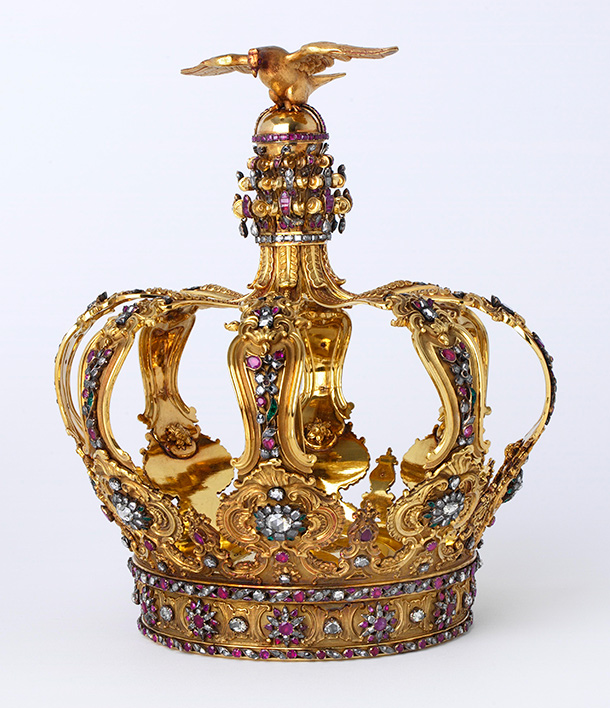








 luxsell.me