Do your salespeople really understand the luxury perspective?

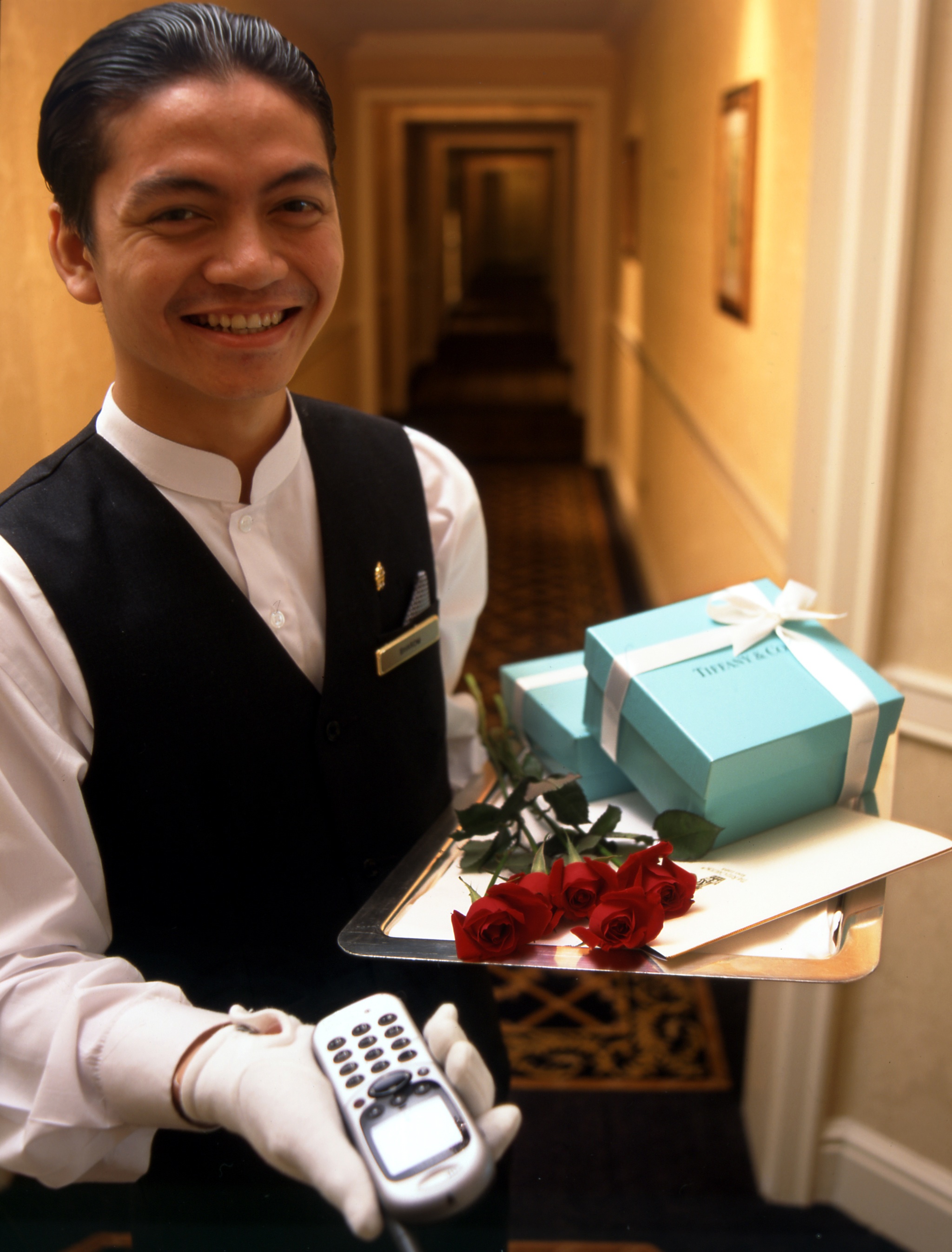
Ritz-Carlton ServiceWhen I was at BMW, we designed a training program for the dealers that required them to stay at a Ritz-Carlton hotel. What the dealers experienced as Ritz-Carlton customers became the basis for their learning. We realized we had been asking dealers to deliver a luxury experience to BMW customers without them fully understanding what that meant. After their Ritz-Carlton stay, the dealers were able to articulate their expectations as luxury consumers, and in turn, they successfully translated that experience to their own customers. Training Magazine has just posted an article about a similar learning program conducted by the Turkish luxury supermarket brand Migros, entitled “Migros’ Luxury Perspective.”

The Migros’ training program was conducted in two phases: first was an in-class session, followed by a second phase that included a a trip to New York and London. According to the article:

The program includes competitor analyses, shopping experiences in luxury stores, experience sharing from world-famous luxury brand sellers, a session of listening to expectations from luxury customers, eating in luxury restaurants, staying in luxury hotels, and many other lifestyle experiences.

The entire experience was designed to help associates get “closer to the customers in terms of general culture and experience.” The result was an increase in customer loyalty from 6% to 15%,

What are you doing to help your sales associates better understand the luxury experience you’re asking them to deliver?

“What’s it to you?” – Igniting Customer Desire

matchWhat’s it to me? Everything! If you can’t articulate why your product or service is important to me, you’ll likely not win me as a customer. Very often sales associates try to differentiate themselves by becoming subject matter experts. They then overwhelm potential clients with a litany of facts and product features with no regard for what’s actually important to the customer. In other words, what is the benefit to the customer?


Being able to distinguish between a feature (a statement of value) and a benefit (a personalized statement of value) is the key to igniting customer desire. When purchasing a luxury service or product, it’s less about need than it is about desire—and desire is emotion based. That means in order to tie into the emotion that will create desire, you need to position not only the value of your product or service, but its value to your customer. Continue reading ““What’s it to you?” – Igniting Customer Desire”

Has your luxury experience been ruined by bad language?

badwordsIn this excellent Forbes article “Are You Killing Your Customer Service with these Language Mistakes,” Micah Solomon confirms what I’ve believed for years… the language your sales associates speak must align with your brand. This canon holds true especially for luxury brands, since luxury customers have heightened service expectations.

Continue reading “Has your luxury experience been ruined by bad language?”

“I’m just looking” can mean so much more

OLYMPUS DIGITAL CAMERAYour customers have said it. You’ve probably said it yourself. “No thanks, I’m just looking” is the most common response to the oft heard question “May I help you?”

How can you avoid the “I’m just looking?” response from customers? The first step is to stop asking closed-ended questions. By using inquisitive, open-ended questions, you’ll initiate a dialogue and side-track the automated “I’m just looking” comeback. (Check out this previous blog post for tips on asking open-ended questions.)

Continue reading ““I’m just looking” can mean so much more”

7 out of 10 Affluent Customers Disappointed by In-Store Service

2014%20Brochure%20picIn a previous post I dissected the upcoming Journal of Consumer Research report that purportedly found customers who receive poor treatment from sales associates in a luxury retail environment are more likely to make a purchase.  Many blogs turned this particular factoid into a headline. But if you dove deeper into the study, you saw that this off-putting approach had no staying power. It only worked on aspirational customers and not for customers who were already familiar with the brand. Even worse, the majority of aspirational customers who, in a vain attempt to be considered “part of the club,”  succumbed to the snooty behavior of their luxury sales person, wound up returning their purchases within two weeks.

Continue reading “7 out of 10 Affluent Customers Disappointed by In-Store Service”

Can Customer Service Go Too Far?

PencilBreakBy now you’ve probably listened to Ryan Block’s excruciating attempt to cancel his Comcast service with a customer service representative “gone wild.” (If not, you can listen here). The recording starts already 10 minutes into the call. In this case the representative, known as a “retention specialist,” tries to force Mr. Block into explaining why he’s canceling his service, even as Mr. Block repeatedly declines to do so. The recording has gone viral and Comcast has admitted it’s “embarrassed by the call.” In a recent apology issued by Comcast, Tom Karinshak, SVP, Customer Experience, said the way in which the representative communicated was “not consistent with how we train our customer service representatives.”

Continue reading “Can Customer Service Go Too Far?”

Good salespeople have great answers, but great salespeople have great questions

It happened again! I walked into one of those posh, ultra-luxurious shops on Fifth Avenue and the smartly dressed, beautifully coiffed sales associate asked “May I help you?” I’m sure she’d been trained on the company value proposition and was knowledgeable on all the new product lines, but what she didn’t know is this is one of the worst ways to greet a customer! Too often this question is met with a polite “No thank you. I’m just looking.”  That’s because “May I help you?” is a closed-ended question—it can be answered with “yes” or “no.” The next time you go shopping, listen to the number of closed-ended questions you’re asked: “Do you like this one?,” “Do you have a budget?,” “Is this the right color?,” “Will that be all for today?”

Continue reading “Good salespeople have great answers, but great salespeople have great questions”

Never Be Closing

Over the years I’ve read many books on sales methodologies and techniques. Inevitably the last chapter of each of these books is entitled “Closing the Sale.” The concept of “closing” the sale is one that has entered the language, and the mindset, of just about everyone involved in the sales process. The epitome of this mindset can be seen in Alec Baldwin’s portrayal of the sales trainer from hell in the film Glengarry Glen Ross. Alec Baldwin, as Blake, reviews the ABC’s of selling (Always Be Closing):

Webster’s dictionary defines the word ‘close’ as “to bring to an end or period.” If we think of the customer’s purchase as “closing the sale,” then we’re saying that’s the end of the relationship with the customer. In 2009 the British Financial Times conducted a survey that found it costs seven times more to locate and sell to a new customer than it does to sell to an existing one. More recently a Gartner Group study found 80 percent of your profits will come from just 20 percent of your existing customers. This is why it’s so important to think of the sale not as the close of a transaction, but as the beginning of a partnership; not as a one-night stand, but as the start of a long-term relationship.

Continue reading “Never Be Closing”

The perils of the price question

pricetagLast year my husband and I attended a re-commitment ceremony for friends of ours. Since we’d never had a formal ceremony of our own, we started talking about hosting a similar event. Like most brides, my first thoughts were about what dress I would wear—I favored a simple, off-white, mermaid silhouette. So last week we visited our local bridal store. As soon as we entered, I fell for a luxuriously beaded, ivory ball gown with a fully-flared skirt and court-length train (nothing like the dress I’d imagined). Seeing that dress caused every little-girl princess fantasy I’d suppressed over the years to come rushing back. I couldn’t wait to try it on.

Continue reading “The perils of the price question”